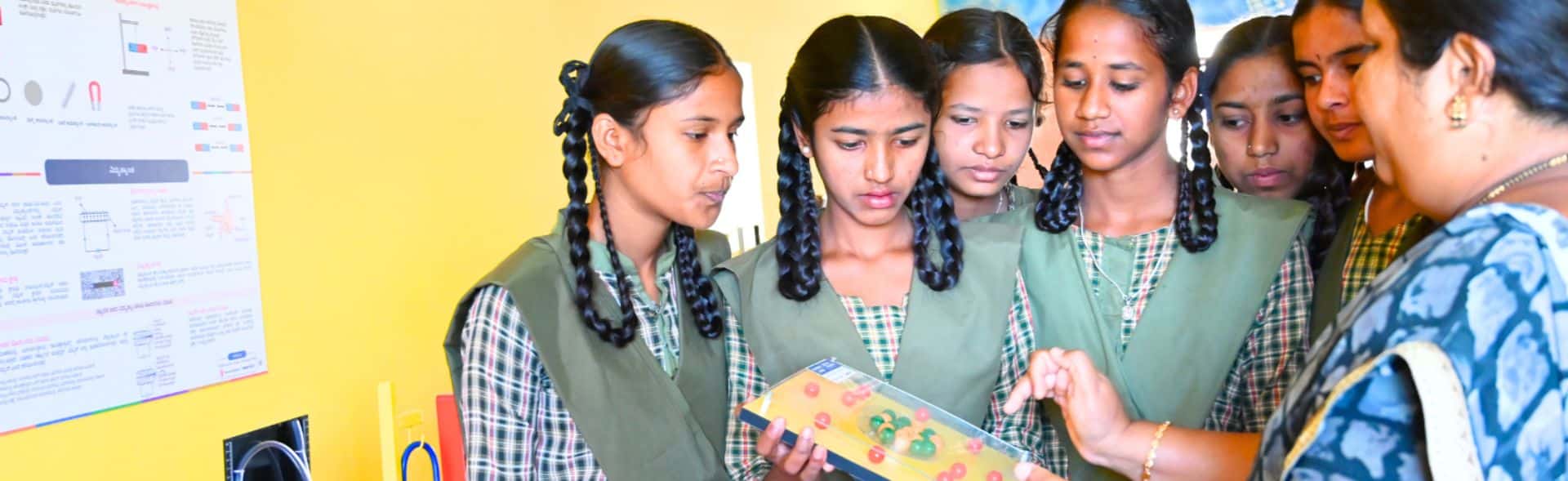
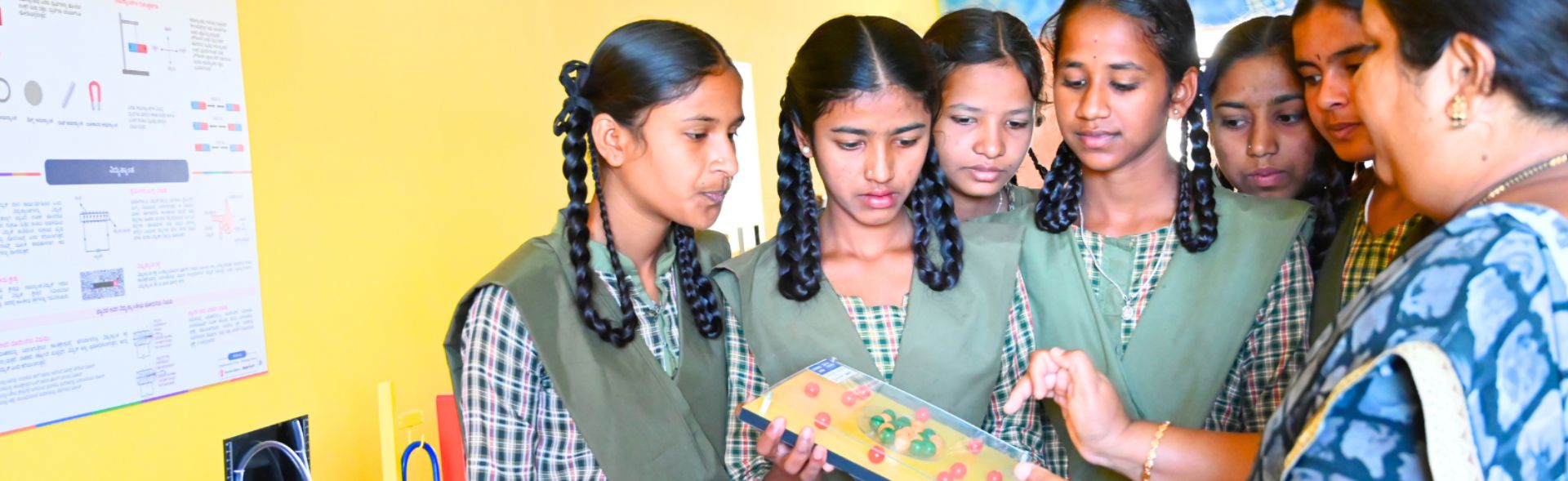
How stem education helps children build future-ready skills
 18/09/26
 Blog
Blog 47
47Today, education needs to be more than lessons, theory, and an occasional practical exercise. Critical thinking and problem-solving must be at the forefront of education in 2026. Qualities like curiosity are not neither rare or nor admirable. qualities. They have become a necessity for each and every child.
As a result, the need of the hour is for education methods and the ecosystem to look beyond traditional classrooms, theory-based learning, and traditional norms in learning. That is where STEM education comes in. It is a way of learning that focuses on helping children build a sense of collaboration, a method of education that pinpoints its focus on helping children build skills such as problem-solving and adaptability.
Students in 2026 and in the future will require much more than theoretical knowledge to excel and grow up to become successful individuals. Learning across the world has begun to look beyond that, and the same is the need of the hour in India.
What is STEM Education?
STEM stands for Science, Technology, Engineering, and Mathematics. However, STEM education is about bringing these separate subjects together through an integrated and activity-based form of learning.
The key is to make children understand how different areas of knowledge eventually connect and intertwine.
STEM learning can include:
- Experiments and simple investigations.
- Projects and practical activities.
- Problem-solving exercises.
- Models and real-world applications.
Read Also: What is STEM Education? Importance and Benefits for Children in India
What Does Future-Ready Education Mean for Children?
Future-ready education for children offers provides them with the knowledge and skills that will stay remain relevant across different situations and the times to come. It is not limited to marks, examinations, or writing accurate long answers.
Instead, STEM education helps children become curious and confident learners who explore new ideas, ask questions, and can actively respond to changing situations.
Important skills that need to be developed to make children future-ready are as follows:
- Curiosity and independent thinking.
- Communication and collaboration.
- Creativity and innovation.
- Logical reasoning.
- Adaptability and continuous learning.
How does STEM learning turn classroom knowledge into practical skills?
It is not enough in today’s world for students to just understand the concept. They must know how to apply the gained knowledge to any given situation. STEM education connects concepts of science, technology, engineering, and mathematics in such a way that children can observe them in everyday life.
This becomes possible through projects, lab experiments, and model-making. Through these methods, children are encouraged to:
- Observe and understand a situation.
- Test ideas and compare results.
- Review their approach and identify improvements.
- Present their findings and solutions.
For example, children can design a simple water-saving model to understand conservation, measure classroom resources to explore mathematics and data, or create a basic structure to address a practical problem.
Such activities in classrooms and schools help students gain a better understanding of abstract concepts. Furthermore, they also encourage qualities like keen observation and testing the knowledge they have gained, and so on.
Future-Ready Skills Children Can Develop Through STEM Education
1. Analytical Thinking and Reasoning
- Encourages children to observe information carefully.
- Helps them identify patterns, compare findings, and draw logical conclusions.
- Develops reasoning through science experiments and mathematical activities.
- Supports thoughtful decision-making in academic and everyday situations.
2. Problem-Solving
- Provides opportunities to create models, designs, and working solutions.
- Encourages children to experiment with new ideas.
- Develops imagination through open-ended activities.
- Helps them look beyond one correct answer.
3. Creativity
Children can turn ideas into models, designs, and practical solutions through STEM. Open-ended activities encourage experimentation and creative thinking beyond a single correct answer.
4. Communication
- Encourages children to explain project ideas and findings clearly.
- Strengthens speaking, writing, and presentation skills.
- Teaches them to ask relevant questions.
- Develops active listening and the ability to share ideas effectively.
5. Teamwork
Working well within a team has always been an important skill for any individual, and it will continue to be.
- It helps children work towards shared project goals.
- Teaches them to divide responsibilities and manage tasks.
- Encourages respect for different opinions and approaches.
6. Continuous Learning
STEM education also focuses on ensuring that children understand that mistakes are simply part of the learning process. It tells them that no matter how many times they fail or face obstacles, the process of growing, learning, and improving continues.
7. Digital and Technology Awareness
- Introduces children to purposeful use of digital tools.
- Supports learning through coding, research, and educational technology.
- Encourages responsible and thoughtful technology use.
- Helps children use digital resources to explore ideas and create solutions.
Why Should STEM Be Connected to Real-World Learning?
Concepts of science, technology, engineering, and mathematics can seem hard to understand on paper. When children see how STEM concepts relate to the real-world right in front of them, they begin to build a better understanding of them.
STEM projects can explore:
- Water conservation and responsible resource use.
- Waste management and recycling.
- Energy use and efficiency.
- The local environment.
- Health and hygiene.
- Community infrastructure.
These activities help children understand why STEM knowledge matters.
Role of Educational NGOs in India Supporting STEM Education
Important areas where an NGO for education in India can support future-ready education include:
- An NGO for education in India extends support by encouraging practical and experiential learning.
- They strengthen educational resources and make them available at the grassroots level.
- Organisations working in education train educators and build teacher capacity.
- They can expand learning opportunities in communities that need them the most.
- An NGO working for education in India also promotes inclusive and child-friendly environments where learning becomes easy.
At Bal Raksha Bharat (also known as Save the Children India), we work to secure every child’s future through quality education, healthcare, nutrition, protection, emergency support, and child welfare.
FAQs
1. Why is practical learning important for children?
It helps children connect classroom concepts with to real-world situations and helps them learn how to apply theoretical knowledge in the real world practice.
2. Is STEM education only useful for technology careers?
No, STEM education helps children build skills they can use to excel in a wide variety of careers.
3. How can an NGO support future-ready education?
NGOs can strengthen practical learning, educational resources, teacher capacity, and learning opportunities in communities.
4. How does STEM education support children’s future careers?
STEM education becomes crucial as it builds skills like creativity, curiosity, problem-solving, digital awareness, and teamwork in children.

“Naveen is an SEO expert and digital marketing analyst at Bal Raksha Bharat with a passion for helping businesses grow online. With a data-driven approach, he specializes in boosting search rankings, driving traffic, and optimizing digital strategies. Follow for tips on SEO, content, and marketing trends."

Email Newsletter
Stay updated with our latest blog posts and offers.
Categories

Popular Posts
- 10 inspiring self-made women entrepreneurs in india - 49839 views
- 80G Explained: Which Donations Qualify for Tax Benefits in India - 30998 views
- Top Ways to Protect Children and Support Their Development in India - 28379 views
- Role of Youth in Nation Building: Empowering Youth for a Stronger India - 26565 views
- What are the major causes of gender inequality? - 25789 views