


Child Welfare Projects by NGO in Odisha
Bal Raksha Bharat is actively running several impactful child welfare programs across key districts of Odisha, including Srinagar and Budgam. These initiatives focus on vital areas such as education, health and nutrition, pneumonia prevention. Our efforts aim to create safer, healthier, and more supportive environments where children can thrive despite the unique geographic and socio-economic challenges of the region. With the generous support of donors and corporate partners, we continue to expand our reach and deepen our impact. Each program is designed to address local needs—whether improving access to quality education, strengthening community-based health systems, reducing pneumonia-related child mortality, or building awareness among parents, educators, and communities—through skill-building, resilience, and sustainable development initiatives.
Programmes from 2025 to 2026-
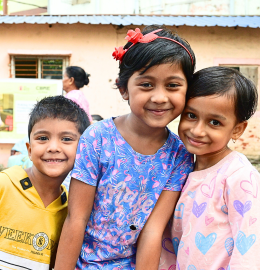
Children First – Common Approach to Delivering Child Rights
State– Odisha
District– Boudh
Donor Name– SaathiRe Social Impact Solutions Private Limited
Total Reach– 10852
Objectives– • Strengthen access to social protection schemes for children and families
• Promote zero tolerance towards child marriage
• Ensure enrolment and retention of children in education
• Improve awareness and practices related to health, nutrition, and hygiene
• Build community capacity for child protection and disaster preparedness
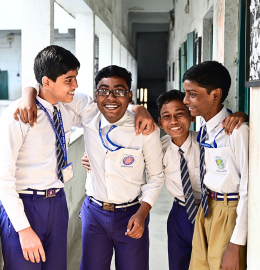
Swagat- A First 1000 Days Initiative
State– Odisha
District– Kandhamal
Donor Name– DBS Bank India Limited
Total Reach– 5758
Objectives– The main objectives of this project are:
• Improve availability and use of quality maternal, new-born, child, and nutrition (MCHN) services in Health sub-centres/Primary Health Centres of targeted regions.
• Improve awareness of beneficiaries on maternal, child and nutrition services (MCHN) in targeted regions.
• Improve accountability and engagement of local government and communities
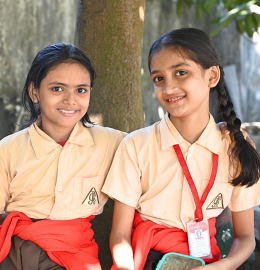
Nayi Disha
State– Odisha
District– Jajpur
Donor Name– Larsen & Toubro Limited, Construction
Objectives– • Conduct comprehensive assessments of ECCD and health service delivery systems
• Identify infrastructure and service gaps and develop a strategic Detailed Project Report (DPR)
• Promote low-cost, sustainable solutions for immediate improvements
• Strengthen collaboration with government departments and community stakeholders
• Build community ownership and engagement
To explore detailed information about each state program, click the button below. This will take you back to the comprehensive program overview, where you can access all relevant details and updates.
Children First-Common Approach to Delivering child Rights (Odisha)
Project Brief
A holistic, community-driven initiative focused on advancing child rights by strengthening access to education, health, nutrition, protection, and social entitlements—ensuring every child grows, learns, and thrives in a safe environment.
Project Context
Children and families in rural Odisha are demonstrating increasing engagement with education, health, and social protection systems when supported through community-led approaches. Building on this opportunity, the project strengthens awareness, access, and utilization of essential services to ensure children’s overall well-being.
Aligned with national priorities on nutrition, education, child protection, and social security, the initiative promotes convergence with government schemes and local systems. By empowering communities, enhancing awareness on health and nutrition, promoting education, and fostering safe environments free from child marriage, the project is contributing to a more inclusive, resilient, and child-friendly ecosystem.
Project Goal
To ensure that children and their families have access to essential services and opportunities that promote education, health, protection, and overall well-being.
Project Objective
Bal Raksha Bharat mainly focusing in following result area under this project:
• Strengthen access to social protection schemes for children and families
• Promote zero tolerance towards child marriage
• Ensure enrolment and retention of children in education
• Improve awareness and practices related to health, nutrition, and hygiene
• Build community capacity for child protection and disaster preparedness
Project Activities
• Identification and linkage of children and families to social protection schemes
• Community awareness campaigns on child marriage, SRHR, and child rights
• School enrolment and retention drives with SMCs and communities
• Promotion of WASH practices and access to ICDS services
• Capacity building of youth volunteers, staff, and community stakeholders
• IEC campaigns and community engagement platforms
• Strengthening community preparedness for emergencies and disasters
SWAGAT: A first 1000 days initiative in Odisha
Project Context- The 1,000 days between pregnancy and a child’s 2nd birthday is the most critical time for a positive impact on a child’s cognitive and physical development. The health and well-being of a pregnant and lactating woman are directly connected to the growth and health of her infant. The right nutrition for the mother and for the child during this time can have a profound impact on the child’s growth and development and reduce disease risk, as well as protect the mother’s health. Undernutrition during pregnancy, affecting foetal growth, is a major determinant of stunting and can lead to consequences such as obesity and nutrition-related non-communicable diseases in adulthood.
Focusing multi-sectoral nutrition efforts on evidence-informed interventions targeting this critical window can have lasting implications across the lifecycle. The combination of good health and reduced disease risk for both mothers and their children can also have a powerful, lasting effect on a country’s prosperity. While the primary objective of the First 1,000 Days approach to nutrition is to reduce child malnutrition rates, particularly chronic undernutrition in the form of stunting, interventions are facilitated through mothers in terms of promoting healthy behaviours such as exclusive breast-feeding and attention to her nutritional status during pregnancy and lactation. Though these interventions were facilitated through women, women’s health indicators are rarely tracked and measured, which represents a missed opportunity to strengthen the evidence base for associations between maternal nutrition and women’s health outcomes.
Bal Raksha Bharat will work in collaboration with the National Health Mission, Health Directorate, and ICDS department for project implementation involving Health Care Workers (HCWs), Front Line Workers (FLWs), caregivers, the community, and Children. All the activities will be undertaken in consultation with District and Taluk health officials to ensure the quality and participation of all Government Medical personnel in the process.
The overall aim is to set up a primary healthcare model that can be replicated across other blocks, districts & states to provide quality MCH services. Among the broad set of high-impact interventions, Bal Raksha Bharat will provide a specific focus on demonstrating at-scale improvements in the services of Primary Health care Centres, and health & wellness centres related to maternal, new-born, child health, and nutrition.
B. Project Objective
• Improve availability and use of quality maternal, new-born, child, and nutrition (MCHN) services in Health sub-centres/Primary Health Centres of targeted regions.
• Improve awareness of beneficiaries on maternal, child and nutrition services (MCHN) in targeted regions.
• Improve accountability and engagement of local government and communities
C. Key Activities Implemented
• Meeting/ Consultation with government Departments for overall support & guidance.
The team achieved the activity goal of aligning SWAGAT Project in collaboration with national health and nutrition programs by holding strategic discussions with health providers at state, district, and block levels. A total of 56 health workers from NHM, WCD and PRI membership agreed to collaborate in the establishment of coordination. The planned engagements enabled relationship building with professionals who helped develop plans to increase access to maternal and child health services. An advisory meeting at the state level included participants from Health & Family Welfare alongside representatives of the National Health Mission and NGOs who actively supported the MNCHN program to ensure successful program execution.
• Facility Readiness: Assessment of healthcare facilities’ readiness to provide ANC, PNC & essential new-born care services focusing on accessibility, including the availability of essential supplies and equipment. – With the objective to assess ground level situation on Maternal New born Health and Nutrition services a base Line survey was conducted. The baseline study on Facility readiness assessment has been done a snap short on basis of Key performance indicators (KPIs) are mentioned.
• Capacity building of health staff & ICDS based on training needs identified from Need Assessment (Block and District level). As a part of capacity building initiative three batches of training sessions were held for 220 frontline Health workers including ANMs, CHOs & ASHAs. These sessions focusing on key areas like IFA consumption, ANC, PNC, breastfeeding, CKMC, immunization, importance of first 1 minutes after birth & Government schemes related to maternal health. As a result, frontline workers demonstrated improved understanding and service delivery during the critical first 1,000 days. Additionally, BRB staff received a 2 days MNCHA+N training by NHM team at BBSR, further strengthening service delivery at community level.
• Screening of women and children for common medical problems and nutrition status utilizing different community platforms, and health camps. During the project period, we had regular consultation with health officials to address safe delivery and ante natal care. In collaboration with Health department, 348 women were screen for common medical issues and nutritional status through various exposures. Out of the Total 321 (92%), received essential health services and 118 children (50%) provided required health care guidance.
• Strengthening patient feedback mechanisms and monitoring through app-based surveys to assess the quality of care from the perspective of pregnant women. Also strengthening record keeping and documentation pertaining to ANC records – Digital app With the objective to strengthen feedback mechanism at the health center level digital kiosk boards and installed at 6 health center location. All data are displayed in local language Odia along with smileys. With this support feedback, mechanism and monitoring will be strengthened to access the quality health care with focus to maternal and child.
• Conducting health education sessions on MNCHN care: Orientation of mothers and family members (including fathers & mother in laws) on basic health, hygiene, and undernutrition issues on a regular basis The staff conducted health education sessions through village & community meeting programmes, which included mothers as well as fathers along with mothers-in-law. Through these sessions, the family gained improved skills for supporting best practice for maternal health as well as child health by improving their habits of hygiene and nutrition and providing timely medical care. This start helped to reach over 179 lactating mothers, 145 fathers & mother in laws. To ensure safe and healthy delivery a special health camp was successfully organized at Gochhapada PHC where 210 pregnant women were taken part to avail the services. Out of which 120 were High Risk Pregnant Women.
• Develop evidence-based SBCC strategy and tools for increasing awareness and care-seeking for MNCHN services. Development of materials like posters, hoardings, leaflets, flipbooks, etc. for awareness generation on Health and nutrition issues. Flipbooks & posters are developed in consultation with health department officials to create mass awareness at community and health facilities on service available in Ayushmaan Arogya Mandir, maternal & new-born care along with nutrition practices.
• Facilitate community mobilization through Mother committees/Jan Arogya Samitis (JAS), health talks, demonstrations camps, wellness days, use of media and young champions on MNCHN care through field visits. Discussed with local health service providers to plan feature community mobilization steps through mothers committee and JAS including health discussion, health camps, media engagement and involvement of Youth champions to promote better maternal new-born child health & nutrition services during field visit.
• Support local health officials in organizing important health events like Breastfeeding Week, Global Handwashing Day, IDCF and SAANS campaigns, etc With a regular dialogue with Programme Management Unit (PMU) NHM, Health & Family welfare both in state & district, the project team have planned to extend support actively to create awareness in the project implementation area directly & indirectly through organising designated health events and campaigns. Breastfeeding Week, Global Handwashing Day, IDCF and SAANS campaigns, etc are the focussed events.
D. Top-line of Results (outputs/outcomes) achieved.
• Installation of Health ATMs in some of the PHCs as a pilot model & Equipping Healthcare professional with Smart equipment like Ayusynk 2 Pro advanced Smart digital stethoscope.
In Consultation with CDMPHO along with other Health service providers in the district 6 advanced technology-based Health ATMs were installed at selected CHCs/PHCs, Sub-centres in Phiringia & district Head Quarter Hospital, offering 59 types of diagnostic tests. This innovative step is improving healthcare accessibility in hard-to-reach locations of aspirational areas. In addition, 12 Ayusynk 2 pro advanced smart digital stethoscopes were provided to Medical officers & health staffs with proper orientation to enhancing diagnostic efficiency through AI supported features.
• Development & deployment of Communication material on Respectful maternity care and on gender sensitive and responsive health facility along with training of health facility staff & Improve awareness of beneficiaries on maternal, child and nutrition services (MCHN) in targeted regions.
As a part of 1000 days initiative to promote safe maternity care and quality health services, various awareness and communication, IEC materials were developed during the period. These are mainly posters, standee, vinyl sun board etc. on the major prevailing area specific issues under for both indoor and outdoor mass of health service facilities & community of Phiringia block after consultation of District public health community officers (DPHCO) and others health and communication experts under National Health Mission and Bal Raksha Bharat. Due to this initiative, we successfully reached out to 2016 beneficiaries. (961 direct 1055 indirect).
• Strengthen quality of services delivered during Village Health Sanitation and Nutrition days (VHSNDs) on Government guidelines for conducting VHSND are in place & Improve quality and coverage of home-based postnatal care for mother/new born care: Ensure postnatal care and regular home visits by Frontline health workers.
Through 40 numbers of visits to prioritised VHSNDs session locations, field facilitators were able to strengthen frontline health workers, (ANM, CHO, ASHA & AWW) and timely mobilization of beneficiaries helped in aware them about facilities provided for maternal care & child health services. The focus of the intervention was to ensure the utilisation of job aids, following Govt. guidelines, mentioning MCP cards and tracking register. Additionally, frontline health workers provide quality homebased new-born care (HBNC) to 57 mothers and new-borns, which further continue through joint visits with front line health workers for better counselling and observations.
‘Nayi Disha’ – Strengthening MNCAHN & ECCD in Odisha
Project Brief:
A focused initiative to strengthen maternal, newborn, child and adolescent health, nutrition, and early childhood development systems through evidence-based planning and community engagement.
Project Context
India has made steady progress in advancing maternal and child health, nutrition, and early childhood development through programmes such as the Integrated Child Development Scheme (ICDS), the National Health Mission (NHM), and the New Education Policy (NEP) 2020. Building on these efforts, the project supports strengthening service delivery and infrastructure at the community level in underserved areas.
By assessing existing systems and identifying key gaps, the initiative enables data-driven planning and localised solutions. It also fosters collaboration with government stakeholders and communities, ensuring improved access to quality services and laying the foundation for sustainable improvements in health, nutrition, and early childhood development.
Project Goal
To strengthen Maternal, New born, Child and Adolescent Health and Nutrition (MNCAHN) and Early Child Care and Development (ECCD) systems through evidence-based planning and improved service delivery.
Project Objectives
• Conduct comprehensive assessments of ECCD and health service delivery systems
• Identify infrastructure and service gaps and develop a strategic Detailed Project Report (DPR)
• Promote low-cost, sustainable solutions for immediate improvements
• Strengthen collaboration with government departments and community stakeholders
• Build community ownership and engagement
Project Activities
• Need assessment through surveys, consultations, and facility assessments
• Development of a Detailed Project Report (DPR) with actionable recommendations
• Health camps for maternal, adolescent, and child health
• Community engagement and awareness through IEC materials
• School-based activities and child engagement initiatives
• Support to Anganwadis, schools, and health centres with essential equipment