


Child Welfare Projects by NGO in Haryana
Programmes from 2024 to 2025-
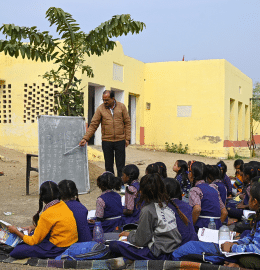
Back to School-Fostering Learning Opportunity
State– Haryana
District– Gurugram
Donor Name– Samsung India Electronics Pvt. Ltd.
Total Reach– 150
Objectives– The three main objectives proposed under this project are as under:
• To establish 1 Child Learning Centre
• To identify children in street situations and prepare them for formal education through age-appropriate bridge courses.
• To facilitate enrolment and retention of children in street situations within mainstream education.
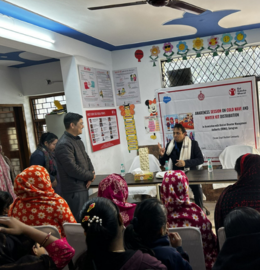
Strengthening Disaster Resilience through non-profit partnerships
State– Haryana
District– Gurugram
Donor Name– Salesforce.com India Private Limited
Total Reach– 1,00,967
Objectives– To enhance Climate & disaster resilience in vulnerable urban and rural communities—especially for children and women—by improving preparedness, facilitating access to social protection schemes, and strengthening coordination between communities and institutional stakeholders.
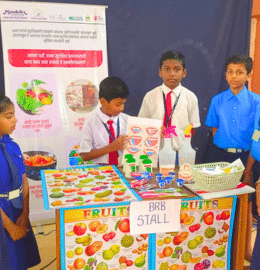
Eat Right School Program
State– Haryana
District– Sonipat
Donor Name– LT Foundation
Total Reach– 17
Objectives– To strengthen structures and systems aligning government programs of RKSK, WIFS and NDD for delivering nutrition and healthy lifestyles education and services for children.
• To improve knowledge towards safe and nutritious food, a healthy lifestyle among school going children and their parents
• To generate evidences for identifying existing gaps in school nutrition programmes and advocacy for filling the identified gaps
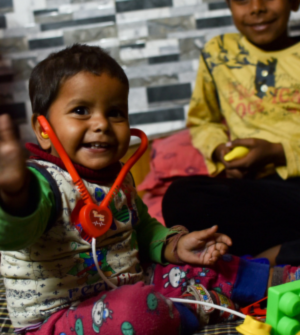
Swasthya Rath: Mobile Health for All
State– Haryana
District– Faridabad
Donor Name– Shahi Exports PVT. Ltd
Total Reach– ____
To explore detailed information about each state program, click the button below. This will take you back to the comprehensive program overview, where you can access all relevant details and updates.
Back to School-Fostering Learning Opportunity
A.Project Context
Increasing rural poverty, recurrent disasters and a lack of earning opportunities have forced thousands of Indian families to migrate to cities along with their children. This migration can expose children to much higher risks of being exploited, experiencing hunger and malnutrition, going without shelter, missing out on education and lacking access to health care.
To ensure that children in street situations (ages 6–14), both girls and boys, access formal education, it is crucial to first address their learning gaps through targeted bridge courses. These courses are designed to assess the child’s current academic level and focus on building foundational literacy, numeracy, and social skills needed for successful school integration. Children are initially engaged through Child Learning Centres (CLCs), which offer a safe, supportive environment for basic education and emotional well-being.
B. Project Objective
The three main objectives proposed under this project are as under:
• To establish 1 Child Learning Centre
• To identify children in street situations and prepare them for formal education through age-appropriate bridge courses.
• To facilitate enrolment and retention of children in street situations within mainstream education.
C. Key Activities Implemented
• To establish 1 Child Learning Centre (CLC)
• Running of CLC
• Providing learning materials of CLC
• Identification of children for enrolling them in CLC
• Bridge course to address the learning gaps
• Enrolment of children in the nearby schools
D. Top-line of Results (outputs/outcomes) achieved.
The key achievements of the projects were listed below:
• Successful identification of 100 children (Boys-49, Girls-51)
• The pre-assessment of the 100 (49 boys and 51 girls) children enrolled in the Child Learning Center (CLC) was conducted
• To bridge the learning gap among children enrolled in the Child Learning Center (CLC), academic sessions are conducted on daily basis using interactive and playful methods that promote learning through engagement and joy. The session aimed at reinforcing foundational literacy and numeracy skills while keeping the children actively involved.
• A unit test was conducted for all 100 children (49 boys and 51 girls) enrolled in the Child Learning Center (CLC). The objective was to assess their academic progress and learning levels
• A post-assessment was conducted with 91 children (Boys-45, Girls- 46) to evaluate the children’s progress and learning outcomes. The Post-Assessment results of the children has been showed a significance improvement in the academic level of children. 49 Children has been promoted from Pre-Primary to Level-1, 14 Children have been promoted form Level-1 to Level-2 and the 28 children who were at the verge of passing the Level-1 has been scored a significantly high marks in this level.
• Successfully enrolled 50 children (21 boys and 29 girls) into formal schools, marking a significant milestone in our endeavour to bridge the gap between non-formal and formal education systems. This transition not only ensures continuity in their educational journey but also opens up better learning and development opportunities for these children
Climate Smart Resilient Community
A. Project Context
Bal Raksha Bharat, with the support of the Salesforce Foundation, has commenced efforts to build resilience and effectively respond to crises in five states across India. This initiative spans six urban settlements—two slums each in Gurgaon, Hyderabad, and Bengaluru, as well as seven urban schools in Pondicherry—and two rural settlements located in two villages within the Motihari block of East Champaran District in Bihar. Among the identified locations, four urban settlements in Hyderabad and Bengaluru, seven schools in Pondicherry, and two villages in East Champaran represent new geographical areas for our engagement. While we have previously operated within the East Champaran district, our work has been focused on different locations within the district.
All ten settlements, whether urban or rural, face various hazards and daily risks. In Gurgaon, Bengaluru, and Hyderabad, BRB concentrated on enhancing risk information, mitigation planning, and coordination among stakeholders. In contrast, the focus in Pondicherry was primarily on addressing the unmet educational needs of children attending the seven most affected schools following Cyclone Fengal. Meanwhile, in Bihar, our efforts were directed not only toward crisis response but also toward improving risk awareness, mitigation planning, and coordination at all levels. Achievements include the distribution of preparedness and relief kits, formation of Child Protection and Resilience Committees, development of localized disaster management plans, and effective stakeholder engagement. Challenges such as language barriers, beneficiary prioritization, and outreach restrictions were addressed through community collaboration and strategic partnerships with local authorities like DDMA.
B. Project Objective
To enhance Climate & disaster resilience in vulnerable urban and rural communities—especially for children and women—by improving preparedness, facilitating access to social protection schemes, and strengthening coordination between communities and institutional stakeholders.
C. Key Activities Implemented
• Community-Based Disaster Preparedness and Planning: 08 intervention communities developed disaster management plans through participatory risk mapping and planning exercises. This activity enhanced the preparedness among community members for well-coordinated emergency response in future disaster.
• Formation of Children’s Groups (CGs) and Child Protection and Resilience Committees (CPRCs): 137 children and 109 adults formed CGs and CPRCs to lead child-centric resilience efforts. These groups promoted child participation in local DRR initiatives and advocacy.
• Family Preparedness Training and Kit Distribution: 1,600 vulnerable families received family survival and preparedness training and family kits. Simulation exercises enhanced their practical understanding of response protocols at the family level.
• Awareness Campaigns on Social Protection and Disaster Risk Reduction:
Over 62,000 people were sensitized on DRR practices and government social schemes through community events, IEC materials, and digital platforms. This led to improved access to entitlements and risk awareness.
• Strengthening Disaster Resilience in Schools and Anganwadi Centres: The project engaged 801 students, teachers, and staff through hazard hunts and preparedness training, resulting in 8 School Safety Plans and 8 AWC Disaster Plans. Formation of 145-member SDMCs and hazard mapping in Bihar improved institutional readiness and reduced vulnerabilities for 91 women and children.
• Formation of School Disaster Management Committees (SDMCs): 145 SDMC members were trained to lead risk mitigation and emergency response in schools. These committees now oversee regular drills, safety audits, and implementation of school safety plans.
• Hazard Mapping in Anganwadi Centres (AWCs): Anganwadi-level hazard mapping was conducted in Bihar to identify key risks and safety gaps. This process enhanced preparedness and safety for 91 women and children attending the centers.
• Emergency Relief and Recovery Support: The project provided relief support to 550 flood-affected families in Bihar through shelter, food, and hygiene kits, ensuring their safety and dignity. In Pondicherry, 600 cyclone-affected children received education kits to restore learning continuity.
• Crisis Modifier and Community-Based Response Mechanisms: The use of crisis modifiers enabled swift, localized responses, ensuring 100% targeted relief delivery and building community capacity for future emergencies.
• Strengthening Community Engagement and Institutional Accountability: The project facilitated consultations with 200 stakeholders, including government departments, communities, and children, to ensure inclusive disaster governance. In Hyderabad, 72 women successfully advocated for infrastructure improvements, while in Bengaluru, a 65-member community interface influenced school safety policies.
• Women-Led Advocacy and Infrastructure Improvements: In Hyderabad, 72 women led local advocacy that resulted in improved drainage and electricity infrastructure, showcasing the power of community voices in influencing governance.
• Community-Duty Bearer Interface for Inclusive Governance: A 65-member interface in Bengaluru promoted structured dialogue between citizens and authorities, leading to more responsive school safety policies and better service delivery for children.
D. Top-line of Results (outputs/outcomes) achieved.
• 62102 people made aware of the social protection schemes and Disaster Risk Reduction, Climate awareness and mitigation.
• 1,600 families received the family preparedness kit and were oriented on family preparedness (Gurgaon, Bihar, Hyderabad, Bengaluru)
• 8 community disaster plans developed per location (Gurgaon, Bihar, Hyderabad, Bengaluru)
• 8 children’s groups and 08 Child Protection and Resilience Committees engaging with a total of 109 members and children at the community level in Resilience Committees.
• 8 schools have an active Disaster Management committee engaging with 145 partners.
• 8 schools & AWCs now have safety plans.
• 801 participants in the school & AWC hazard hunts exercise.
• 100% of target families (550) received the relief support in Bihar
• 600 children from 7 affected schools have benefited from the education kits for back to school in Pondicherry.
• 4 multi-stakeholder consultation meetings held at the district level for showcase the work and strengthen the DDMA system at district level.
Eat Right School Program
A. Project Context
The ‘Eat Right India’ movement, a flagship initiative by the Food Safety and Standards Authority of India (FSSAI), is dedicated to ensuring the health and well-being of our nation’s people. This visionary program revolves around promoting safe, nutritious, and sustainable diets through a harmonized, multi-sectoral approach. Recognising the pivotal role of early food habits in shaping lifelong well-being, ‘Eat Right India’ strategically focuses on our youth.
Understanding that dietary habits often take root early in life and are resistant to change, ‘Eat Right India’ has chosen to focus its efforts on the youth. Indeed, within the hallowed halls of schools, the seeds of healthy eating habits can be sown, fostering lifelong well-being. The ‘Eat Right School Program,’ a brainchild of FSSAI, ingeniously deploys food as a pedagogical tool to sow the seeds of lasting change in children’s dietary habits. In recognizing the profound agency of young people as catalysts for change, we are emboldened by their potential to positively influence entire families.
In collaboration with LT Foundation, Bal Raksha Bharat has undertaken a noble initiative: to empower school children as agents of change, igniting an enduring transformation in their health and nutrition. Our primary objective is to elevate their Knowledge, Attitude, and Practice (KAP) towards healthy and nutritious food. Simultaneously, we endeavour to fortify the underlying structures and systems, ensuring seamless delivery of essential nourishment. But our mission extends beyond these walls – we aim to strengthen the implementation strategies of critical programs, including the Rashtriya Bal Swasthya Karyakram (RBSK), School Health, and Micro-Nutrient initiatives. In our tireless pursuit of knowledge, we seek to unearth the gaps in current school health and nutrition programs, advocating for sustainable solutions that bridge these divides.
GOAL
To empower school children as agents of change to improve their health and nutrition status with the focus on Safe and Nutritious Food and hygiene at 40 Schools in Haryana & Punjab
OBJECTIVES
• To strengthen structures and systems aligning government programs of RKSK, WIFS and NDD for delivering nutrition and healthy lifestyles education and services for children.
• To improve knowledge towards safe and nutritious food, a healthy lifestyle among school going children and their parents
• To generate evidences for identifying existing gaps in school nutrition programmes and advocacy for filling the identified gaps
B. Key Activities – March 2025
1. Raisen, Madhya Pradesh: Project Launch & Rollout
• Launch Event Held: 27th March 2025 at Hotel Amogh, Raisen.
• Coverage: Targeting 20 schools in Bari Block.
• Participants: Block/District officials from Education, Health, Food Safety departments, Zila Panchayat, DIET, and Bal Raksha Bharat team.
• Activities:
o Formal inauguration by CEO-Zila Panchayat.
o Awareness session on food safety, nutrition, and Eat Right certification.
o Capacity-building workshop for departmental convergence and school-level planning.
o Demonstrations on food adulteration and food label reading conducted by the Food Safety Officer.
2. Sonipat, Haryana: DIET Faculty Training & Project Kickoff
• Event Date: 28th March 2025.
• Venue: DIET Rai, Sonipat.
• Coverage: Targeting 20 government primary schools.
• Participants: 22 DIET faculty members.
Activities:
o Project orientation and certification roadmap shared.
o Hands-on training session led by field expert on nutrition education and Eat Right School implementation steps.
o Launch ceremony conducted with enthusiastic participation from faculty.
C. Key Outcomes
• High-level buy-in and commitment from District Education Officers and Zila Panchayat leadership in both districts.
• Cross-departmental convergence initiated, ensuring sustainability.
• Strong foundation laid for implementation in 40 schools across two states.
• DIET faculty trained to cascade knowledge and monitor school-level rollouts.
• Awareness on FSSAI’s certification process and food safety standards enhanced at grassroots.