


Child Welfare Projects by NGO in Andhra Pradesh
Programmes from 2025 to 2026-
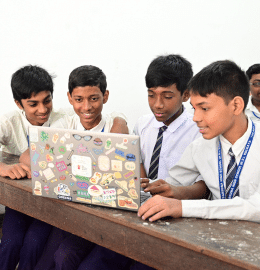
Honda ki Pathshala
State– Andhra Pradesh
District–
Donor Name– Honda India Foundation
Total Reach– 2,500
Objectives– The main objectives of this project are:
-To improve learning outcomes of students of 6th to 10th grades focusing on subjects English, Science and Maths
-To create a supportive learning environment for academic success and holistic student development through enhanced parental and community engagement
-To disseminate program-based evidence for a sustained and scaled up impact.
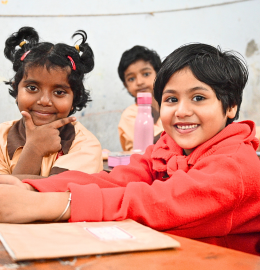
Right Start: Education Kit for Children
State– Andhra Pradesh
Donor Name– Ceva Freight India Private Ltd.(Bollore Logistics)
Objectives–
– Provide education kits to children in need
– Improve attendance and reduce dropout rates
– Strengthen foundational learning outcomes
Ek Pehal Project Utkarsh
State– Andhra Pradesh
District–
Donor Name– CBRE South Asia Private Limited
Objectives–
– Establish ICT-enabled SMART classrooms
– Strengthen School Management Committees (SMCs)
– Improve nutrition and health awareness among children and communities
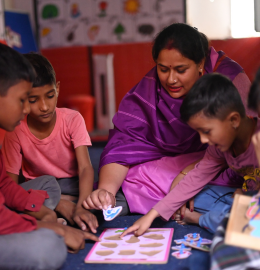
The Right Start: Enhancing School Readiness for Children in Anganwadi Centres
State– Andhra Pradesh
District– Ananthapura
Donor Name– Generali Central Insurance Company Limited
Total Reach– 8201
Objectives-• Strengthen early childhood education through play-based learning approaches
• Build the capacity of Anganwadi Workers and the Integrated Child Development Services (ICDS) officials
• Enhance child-friendly learning environments in Anganwadi Centres
• Promote parental and community engagement in early learning
• Support smooth transition of children from Anganwadi to primary schools
To explore detailed information about each state program, click the button below. This will take you back to the comprehensive program overview, where you can access all relevant details and updates.
Honda Ki Pathshala
Project Context- Education is the fundamental right of every child, as mandated in the Right to Education Act of 2009. The act clearly mandates this right to every child of age group 6-14 years to obtain minimum education. The National Education Policy (NEP) 2020 aims to provide equal opportunities for education for all, regardless of socio-economic background, gender, or disabilities. Through the policy, it is envisioned to ensure equal opportunities for education for every child, especially from disadvantaged and underprivileged groups.
NAS, conducted by the Centre in coordination with the CBSE and NCERT to assess learning outcome levels of students of classes 3, 5, 8, and 10, was held on November 2021. The NAS 2021 report shows that in Grade 3, the national average of scores obtained by students in languages was 62 in 2021, compared to 68 in 2017. The corresponding Math scores are 57 and 64, showing a drop of seven percentage points. In Class 5 it’s 44, compared to 53 in 2017, a fall of nine percentage points and in Class 8, the national average came down from 42 to 36 in Math, 44 to 39 in science and social science, and 53 to 57 in language.
Despite the government’s efforts to improve the situation, the number of out-of-school children continues to rise and with only half of all students completing upper secondary school. The challenges are multifaceted and include the shortage of qualified teachers, inadequate infrastructure, limited availability of resources, and the need for increased parental and community involvement. Furthermore, there are socio-economic challenges, such as poverty and discrimination, that impede progress in primary and secondary education across India.
Most of the regions in the country grapple with the issue of children lacking age and grade-appropriate competencies. The pandemic has exacerbated these issues, plunging many children into a learning crisis. It is imperative that we explore different strategies and take deliberate steps to uplift these children from the depths of learning poverty, especially those hailing from diverse backgrounds. While several state governments have initiated programmes to bridge the learning gap for children falling behind, there has been a tendency to prioritize syllabus completion and board exam-oriented approaches, particularly for students in grades 9 and 10. This focus has inadvertently marginalized approximately 35%-40% of children who struggle in many government schools. These children require specific attention and tailored approaches to prevent them from slipping into the abyss of learning poverty.
These children can be supported with after school support and some key reasons for the need for after-school support for marginalized children are as below:
Marginalized children might face additional academic challenges due to different factors such as limited access to educational resources, language barriers, or lack of support at home. After-school support programmes can provide extra tutoring, homework help, and educational enrichment activities to reinforce learning.
After-school support provides additional support and reinforcement for academic subjects. It might support students to better understand complex concepts, complete assignments, and perform well in examinations.
After-school support allows students to receive specialized guidance in specific subjects or areas where they may be struggling. This personalized attention can address individual learning needs and enhance overall academic performance.
In a diverse country like India, language proficiency can be a significant factor in academic success. After-school support can help students improve their language skills which is often important for pursuing higher education and career opportunities.
Some students may have learning gaps or missed concepts during regular school hours. After-school coaching can identify and address these gaps, ensuring a more comprehensive understanding of the curriculum
After-school coaching can help bridge the gap between privileged and underprivileged students by providing additional resources and support to those who might not have access to quality education.
Need Assessment To understand the requirement of the programme, a need assessment was undertaken in Lucknow, Uttar Pradesh and Pune, Maharashtra. Some of the critical finds of the same are as follows:
School-
– No after school support is provided by the schools
– As per the teachers, parents are not responsive towards their child’s education
– Very few children go to tuitions
– To address poor learning outcomes, the teachers try to address within the class hour and also share with their parents to guide them at home, but no significant progress have been witnessed.
– No extracurricular activities are conducted in the schools
– Suggested to add life skill, vocational skill development & engage the children to learn by doing rather than classroom courses.
Community-
– Parents expressed their disappointment towards current teaching style – Most of the people possess limited knowledge on the career building of children – Most of the parents expressed reluctance towards girls’ higher education & early girl child marriage is also prevailed in the communities – Some members are part of SMCs, but they are disappointed with its, functioning in schools – Mostly people are doing small business, shops, E-rickshaw driver, rickshaw, Zomato, Rapido men, mason, plumber & daily wage labourer etc.,
Children
– Children do like to attend schools – Most of them are regular to school unless they have any festival or sickness – Children expressed their aspirations to pursue conventional careers and exposed limited exposure to vast career options. Many of the children shared that they would require mental support to pursue the career of their choice – Children expressed their willingness to pursue higher education; if their families “allow/support” them to do so. – Children suggested to have extra classes or remedial support classes to be different from regular classroom teaching which help them
B. Project Objective
Goal: Enhance academic performance and cultivate life skills among the children while fostering supportive learning environment through active engagement with parents and teachers.
Major Activities and key results
Objectives: –
1- To improve learning outcomes of students of 6th to 10th grades focusing on subjects English, Science and Math. 2- To create a supportive learning environment for academic success and holistic student development through enhanced parental and community engagement 3- To disseminate program-based evidence for a sustained and scaled up impact.
C. Key Activities Implemented
1- Setting up Honda Ki Pathshala: After School Education Centre: Set up 25 Centres across 11 states. The centre that runs in government or government aided private schools equipped with Smart TV, Almirah, Notice Board, Table, Chair and White Board 2- After School Academic Support: Two Academic Support Fellow are appointed for every Centre. They teach English, Math and Science to Grade 6th to 10th as per the schedule. 3- Learning Assessment: Every student is assessed on the basis of subject specific question at th beginning of the session which is known as base Line and again at the end of the session that is known as End Line assessment to assess the improvement in learning of the student in three subjects: English, Math and Science. 4- Special Events and observation of important days: Special event and days are organised for children on different occasion and purpose. These events include, National Science Day, National Math day, UNCRC Child Rights Day, Children’s Day, Republic Day, Independence Day, etc. 5- Life skill education: Children are provided life skill education to build their self-confidence, self-esteem, communication skill and problem-solving skill. They are taught how to think logically and improve life skill and manage challenges in their life. How to take care of mental health and how to take care of self, etc are also taught. 6- Career Guidance: Students of grade 9th and 10th are given career guidance considering their choice, interest and career plan. 7- Parent Teacher Meetings: Regular meetings with parents of HkP centre children are held to encourage involvement of parents in their children’s education and career plan and how to create an enabling environment in home for learning outcome. Teachers also share the activities being held in the centre and seek feedback from parents.
D. Top-line of Results (outputs/outcomes) achieved.
1- Enrolled more than 1500 children so far 2- The Base Line and end line Assessment suggests that the average improvement (all subjects all grades) of the entire children has been 31.6% against the target of 15%, showing achievement of 200% result. See table below. 3- Percentage of children scoring above 60% across subjects (for all grades) have increased from 3% during baseline to 20% during End line, on an average. 4- Almost 99% of children studying in 10th Grade wished to continue their education post 10th Board. 5- There has been tremendous improvement in attendance of children in school. 6- Students are representing their schools in different competition at district and state/zonal level and winning laurels for their schools 7- Active participation of children in extracurricular activities sharpening their soft skills and creativity. Representing their school at higher level and bringing accolades. 8- High appreciation and support from govt., teachers, students and parents for Honda ki Pathshala
The Right Start- Enhancing School Readiness for Anganwadi Centres in Andhra Pradesh
An early childhood education initiative focused on strengthening school readiness through play-based learning, capacity building of Anganwadi workers, and community engagement to ensure children transition successfully into primary education.
Project Context
Early childhood is a critical stage to build strong foundations for lifelong learning. Across India, Anganwadi Centres serve as a vital platform to support young children’s development, offering an opportunity to enhance school readiness through quality early learning experiences.
Aligned with national priorities such as the New Education Policy (NEP) 2020 and the Early Childhood Care & Education (ECCE) frameworks, the project focuses on strengthening these existing systems by introducing play-based, child-friendly learning approaches. By empowering Anganwadi Workers, engaging parents, and creating stimulating learning environments, the initiative is enabling children to develop essential cognitive, social, and emotional skills—ensuring a smoother and more confident transition into formal schooling.
Project Goal
To improve school readiness and ensure access to quality early learning for children aged 3–6 years.
Project Objective
– Strengthen early childhood education through play-based learning approaches
– Build the capacity of Anganwadi Workers and the Integrated Child Development Services (ICDS) officials
– Enhance child-friendly learning environments in Anganwadi Centres
– Promote parental and community engagement in early learning
– Support smooth transition of children from Anganwadi to primary schools
Project Activities
– Transformation of Anganwadi Centres into model pre-school learning spaces
– Training and mentoring of Anganwadi Workers on ECCE and play-based pedagogy
– Establishment of learning corners and child-friendly environments
– Community engagement through parent trainings, mother groups, and awareness drives
– Strengthening convergence between Anganwadi Centres and primary schools
– Monitoring, evaluation, and continuous learning through structured assessments
Right Start: Education Kit for Children
Project Brief:
Right Start aims to support underprivileged children with essential education kits, enabling better learning, improving attendance, and reducing dropout risks.
Project Context
Many children lack access to basic school supplies, which affects their ability to learn, attend school regularly, and build foundational skills.
Project Goal
To enhance learning outcomes and ensure continued education for vulnerable children by providing essential learning resources.
Project Objectives
– Provide education kits to children in need
– Improve attendance and reduce dropout rates
– Strengthen foundational learning outcomes
Project Activities
– Needs assessment and identification of beneficiaries
– Procurement of education kits
– Distribution to 4,136 children
– Documentation and reporting of impact
EK PEHAL – PROJECT UTKARSH
Project Brief
Ek Pehal (Project Utkarsh) is a transformative initiative aimed at making government schools SMART while promoting healthy habits among children. The project integrates digital learning, strengthens school systems, and improves nutrition and hygiene practices to create a holistic learning environment.
Project Context
The program strengthens digital learning infrastructure and promotes nutrition awareness and effective school governance to enhance holistic child development and 21st-century skills, in collaboration with the government’s frontline systems.
Project Goal
To enhance learning outcomes and well-being of children through SMART classrooms, strengthened school systems, and improved health and nutrition practices.
Project Objectives
• Establish ICT-enabled SMART classrooms
• Strengthen School Management Committees (SMCs)
• Improve nutrition and health awareness among children and communities
Project Activities
• Setup of SMART classrooms and teacher training
• Formation of Health & Nutrition Clubs
• Awareness sessions on hygiene, handwashing, and nutrition
• Growth monitoring and nutrition support for children
• Community engagement through mothers’ groups and school platforms