Child Welfare Projects by NGO in Tamilnadu
Bal Raksha Bharat is actively running several impactful child welfare programs across key cities in Tamilnadu, including Mumbai, Pune, and Nashik. These initiatives focus on vital areas such as education, health and nutrition, child safety, and digital cybersecurity. We aim to create safer, healthier, and more supportive environments where children can thrive. With the generous support of various donors and corporate partners, we continue to expand our reach and deepen our impact. Each program is designed to address local challenges while empowering children, parents, educators, and communities through awareness, skill-building, and sustainable development efforts.
Programmes from 2024 to 2025-

Create a safe and enabling experience for children online
State– Tamilnadu
District– Thiruvallur
Donor Name– Norton LifeLock
Total Reach– 82,400
Objectives– The project aims to improve online safety for children by empowering key stakeholders: children, caregivers, teachers, community members, and enforcement officials. It seeks to equip them with the necessary knowledge and tools to identify risks, respond effectively, and promote safer online environments for children.

Bridge Foundation Program
State– Tamilnadu
District– Ramanagara
Donor Name– Bosch India Foundation
Total Reach– 1048
Objectives– The project follows a holistic, phased implementation strategy focused on improving teaching practices and learning experiences: Phase 1: A two-day workshop on experiential teaching and learning methods, including a needs assessment. Phase 2: A two-day workshop covering key concepts, perspectives, and the knowledge base of 21st-century skills. Phase 3: On-ground implementation of the program in selected schools. Phase 4: A two-day presentation workshop, showcasing learnings and outcomes.

Right Start: Education Kit for Children
State– Telangana
District– __
Donor Name– Ceva Freight India Private Ltd.(Bollore Logistics)
Total Reach– __

Ek Pehal Project Utkarsh
State– Tamilnadu
District– Tamilnadu
Donor Name– CBRE South Asia Private Limited
Total Reach– ___

Fostering Quality Education Through Strengthening ADW Schools in Tamil Nadu
State– Tamilnadu
District– Perambalur
Donor Name– Sun Tv Network Limited
Total Reach– ___

Multi Activity Centre (MAC) – A Life Cycle Approach
State– Tamilnadu
District–
Donor Name– Pirojsha Godrej Foundation
Total Reach– ___

Udaan: Enabling Education Access for Children of Migrant and Labour Communities
State– Tamilnadu
District– ____
Donor Name– CBRE South Asia Private Limited
Total Reach– ___
To explore detailed information about each state program, click the button below. This will take you back to the comprehensive program overview, where you can access all relevant details and updates.
Create a safe and enabling experience for children online
Overview of the Project- The project aims to improve online safety for children by empowering key stakeholders: children, caregivers, teachers, community members, and enforcement officials. It seeks to equip them with the necessary knowledge and tools to identify risks, respond effectively, and promote safer online environments for children.
Location- Thiruvallur district of Tamil Nadu and Pune city of Maharashtra in India
Context- This project aims to enhance the online safety of children by taking a multi-faceted approach, addressing gaps in digital knowledge, behaviour, and security systems and also the rising incidents of cybercrime against children, the lack of awareness among children and parents, and the current educational gaps in digital literacy. The initiative focuses on equipping children with essential digital intelligence and cyber-safety skills through tailored curriculum and school-based activities, including the formation of Cyber Safety Clubs. In parallel, it seeks to build a supportive ecosystem by engaging teachers, parents, NGOs, and community members in awareness and training programs. Finally, the project aims to strengthen institutional mechanisms by developing training materials for police and advocating for policy changes to ensure the prioritization of child safety online. Through coordinated actions, this initiative strives to create a safer digital environment for children, fostering open dialogue and accountability across all stakeholders involved.
Objective- To improve knowledge and create a safe online experience for children across 80 government schools in the Pune district of Maharashtra and Thiruvallur district of Tamil Nadu. • To empower parents & SMC members and duty bearers & civil societies in ensuring the safety and well-being of children online at home, at schools and in public places.
Target Area- Tiruvallur District, Tamil Nadu Pune District, Maharashtra
Key Target Group- Children: Primary beneficiaries learning online safety, digital literacy, privacy protection, identify threat, and reporting mechanism
Caregivers (Parents/Guardians): Understand monitoring mechanism, engaged in guiding children and managing home digital environments and reporting mechanism
Teachers: Empowered as TOTs to educate children on digital citizenship and online safety.
Community Members: Supported to foster a safe local online ecosystem.
Enforcement Officials: Trained to recognize and respond to online abuse, cybercrime, and exploitation.
NGOs and Civil Society Organisations: Empowered to create awareness among their stakeholders
Reporting Period- 1st April 2024 – 31st March 2025
Key Activities- 1. Special classes for Children (students) on Online Child Safety 2. Formation and Strengthening Cyber Safety Clubs (Children’s Groups) 3. Improvement in knowledge and Awareness among children 4. Awareness Drive in Schools 5. Training of Teachers on Online Child Safety 6. Orientation of SMC Members and Parents 7. Awareness Drives in Communities 8. Training of DIET Faculty and Aided School teachers 9. Training of NGO representatives 10. Development of Training Module for Police 11. Training of Law enforcement Officials 12. Interface Meetings with law Enforcement Officials 13. Leveraging existing resources and partners to amplify the agenda and Deeper online and offline engagement with youth and children
Major Activities and key results
Special Classes for children on online safety– Children in the project Intervention schools were trained on an updated version of a child-friendly module on Online Safety – Children from government schools covered (31 rural schools in Tamil Nadu, 25 Urban schools in Maharashtra) received training where 100% of schools covered and 6611 (Boys-3569, Girls-3042) children received training
Formation and Strengthening Cyber Safety Clubs- Introduced Online Safety Clubs for children and encouraging peer-to-peer learning and accountability. 49 Groups were formed and received training achieving 100% of the target. 1232 children Club members received training on online safety clubs
Improvement in knowledge and Awareness among children- Children were engaged in special classes to learn and express their understanding of online safety, fostering long-term behavioural change. 98.95% of children (boys and girls) who underwent the special session on online child safety demonstrated improved knowledge on cyber safety varying from 1% to 100%. The overall change in the average percentage score of all children in the Post-Test, compared to the Pre-Test, was recorded at 45.9%. There is very negligible difference in the rate of learning between boys (45.95) and girls (45.99).
Training of Teachers on Online Child Safety- Used BRB’s curriculum for online safety education, integrated into classroom activities. Provided tools and resources to facilitate teaching on cyberbullying, online privacy, misinformation, identity theft, responsible media consumption and more complex online safety issues. As part of a comprehensive initiative to promote digital safety in schools, 267 teachers (Male-111, Female-156), 139% of the target, were trained through a series of in-person workshops followed by handholding support and mentorship
Orientation of SMC Members and Parents- Rolled out a series of trainings on managing digital devices, identifying harmful content, new trends (social media, online gaming) and deepened parental involvement and engaging children in conversations about online risks. Trained caregivers to monitor and guide children’s online behavior. Against the target of orienting 90% of 520 School Management Committee (SMC) members / Parents (468) for the current year in both the locations, the project imparted training to 632 SMC/Parents- 135% of the target. This includes 124 SMC members (Male-35, Female-89) in Maharashtra and 508 parents (Male-75, Female-433) across both the project locations. The orientation was based on caretaker module on cyber safety Developed community action groups through SMCs to address local digital safety issues. Created support systems for reporting online risks.
Awareness Drives in Communities- The project aimed to reach around 70,000 people in intervention area with the message of the importance of being safe online. The project was able to communicate the message of cyber safety to as many as 363054 individuals, which is 518% of the target. This reach is considered as ‘Indirect Reach’. The reach through different awareness raising activities in intervention area under the project
Training of DIET Faculty and Aided School teachers- The project had a plan to train 55 DIET (District Institute of Education and Training) officials, Aided School teachers, B.Ed., students across both the locations (Maharashtra-25, Tamil Nadu-30). The project trained a total of130 DIET Officials and B.Ed., students (236% of the target).
Training of NGO representatives- The project had the target to train 20 NGOs, 10 NGOs in each state. The project trained 113 representatives from 68 NGOs (more than 3 times of the target).
Training of Law enforcement Officials- Last year, the Project had developed a Training Module for Police Officials on Online Child Safety considering their role in preventing and addressing cyber safety cases involving children. During the current year, the Training Module got translated into Marathi for Pune, Maharashtra location. The project had the target to train 40 police officials (20 in each location) based on this module. The project could train 93 police officials instead, that is 232% of the target, due to the partnership with and overwhelming support from the senior leaders of Police Department.
Development of Training Module for Police- In consultation with BRB child protection and subject experts, senior police training officers, lawyers, and others, developed a two-day training module. The module was field-tested during the Training of Trainers in Pune in March 2024. Based on the standard module the training was delivered to the Police personals in both Tamil Nadu and Maharashtra location
Awareness Drive in Schools- A total of 4,006 persons including children, teachers and parents (Male/Boys-1818, Female/Girls-2188) participated in awareness sessions on cyber safety in both intervention and non-intervention schools. There were 3.304 children and/or their parents and teachers (Male/Boys- 1465, Female/Girls- 1839) from 56 intervention schools and 702 children (Boys-353, Girls-349) from non-intervention schools/institutions.
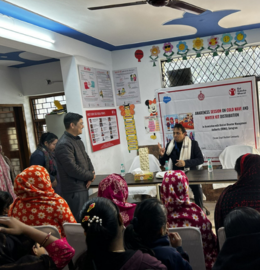
Interface Meetings with law Enforcement Officials- The first interface meeting with law enforcement officials was held on 31st Jan 2025 with 7 (Male-3, Female-4) law enforcement officials and other 8 school staff in Pune, Maharashtra. The main agenda was to share the project updates with them, exchanging expectations and to discuss on emerging trend in cybercrimes, especially against children. BRB team shared its experience and learning of over four years on the issue of online child safety in Maharashtra and Tamil Nadu and sought support and suggestions from the officials. An Interface Meet on “Creating a Safe and Enabling Experience for Children Online” was held on 26th March 2025 at Sennetta Hotel, Tiruvallur, with 28 participants (14 male, 14 female), including government officials, educators, police officers, and child protection stakeholders.
Leveraging existing resources and partners to amplify the agenda and Deeper online and offline engagement with youth and children- 1- Six times posting of reels/videos in social media on Cyber Safety made and BRB-Norton partnership on the issue reaching 14011041 social media accounts with engagement of 126486 persons. 2- One Town Hall with the involvement of Norton Cyber Experts for Children and Youth in November 2024. 652 children across India participated. 3- One Roundtable with Partners (Teachers and NGOs) and cyber experts including representatives from Norton. 28 persons participated from more than 10 organisations/institutions. 4-126551persons engaged through social media campaign, Town Hall and Round Table and 363054 persons reached through community awareness activities and Voice SMS campaign. Total online and offline reach- 489605
Bridge Foundation Program
A. Project Context
Traditional teaching methods are not effectively developing students’ analytical and creative skills. Research indicates that fewer than 10% of classrooms have transitioned from rote learning to more dynamic approaches. Industry experts highlight a growing concern that current education systems are not providing the skills needed for future workplaces shaped by AI and automation. To bridge this gap, it is crucial to implement teaching methods that incorporate 21st-century skills, ensuring students are well-equipped for real-life challenges. National Educational Policies emphasize the importance of activity-based and experiential learning for skill development. Teachers need targeted capacity-building programs to acquire and apply new teaching strategies. This involves continuous learning, practice, and evaluation, supported by systematic monitoring and mentoring within the educational framework. By enabling teachers to adapt to these evolving requirements, we can transform classrooms into environments that effectively prepare students for future success.
B. Project Objective
The project follows a holistic, phased implementation strategy focused on improving teaching practices and learning experiences:
• Phase 1: A two-day workshop on experiential teaching and learning methods, including a needs assessment.
• Phase 2: A two-day workshop covering key concepts, perspectives, and the knowledge base of 21st-century skills.
• Phase 3: On-ground implementation of the program in selected schools.
• Phase 4: A two-day presentation workshop, showcasing learnings and outcomes.
• Teachers will receive comprehensive support packages that include: Project-Based Learning modules for English, Math, and Environmental Science/Science (Grades 4 to 7). Also, an assessment sheets aligned with the above subjects and grades. In the first year, the program will be implemented in 35 selected government schools, with training provided to 70 teachers.
• To ensure effective implementation and sustained impact, the project also emphasizes continuous handholding support through bi-weekly or monthly meetings between BRB facilitators and teachers. An online platform (including WhatsApp) for teachers to ask questions, share experiences, and access learning resources.
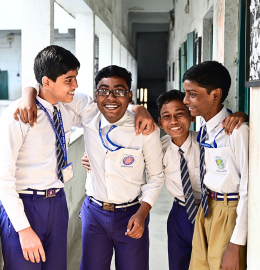
C. Key Activities Implemented
Signing of MoU with the Education Department- To ensure effective implementation of the project in close coordination with the Department of Education, a comprehensive joint partnership was initiated. A draft Memorandum of Understanding (MoU), incorporating the 21st-century skills approach under the “Rising Rajasthan” initiative, was prepared and shared with the Education Department for review and approval. After a series of reviews, discussions, and presentations on the project scope, the MoU was finalized and signed in March 2025. This MoU is valid for a period of four years. In accordance with departmental norms, a nodal officer was appointed to oversee the review and monitoring of project activities. Following the appointment, the nodal officer authorized the Block Education Department to extend full support and cooperation for the successful implementation of 21st-century skills across 106 schools in the Bassi Block. Based on this authorization, the Block Education Department issued a formal letter to 35 schools, inviting their participation in a three-day training program on 21st-century skills as part of the project.
Orientation of Project Team on 21st-Century Skills- A seven-day residential orientation and training program on 21st-century skills was conducted in collaboration with Bosch India Foundation. The training aimed to equip participants with essential skills needed to thrive in today’s fast-paced world, including critical thinking, creativity, collaboration, communication, digital literacy, and problem-solving. The sessions emphasized adaptability, lifelong learning, and a holistic educational approach. Participants were encouraged to reflect on their current competencies and explore ways to further enhance them for future success.
Baseline Assessment in Schools- To assess the learning levels of students in relation to the 4Cs (Communication, Collaboration, Critical Thinking, and Creativity) within the subjects of English, Mathematics, and Environmental Studies (EVS), a baseline assessment was conducted in 35 selected schools. The focus was on students from Grades 4 to 7. A Management Information System (MIS) format was developed using KOBO tools for data collection. The process of entering the collected data is currently ongoing.
District-Level Orientation with Government Officials- A district-level orientation workshop was organized on 12th February 2025 at Hotel Ramada, Jaipur, for education department officials. The objective was to build awareness around the “Bridge Foundation Program,” its goals, and its implementation strategy in the 106 schools of Bassi Block. The session also introduced participants to the key components of 21st-century skills—such as communication and collaboration, critical and creative thinking, digital literacy, and socio-cultural understanding—and their integration into project-based learning in classrooms. An Android-based learning application, “Teachopia,” developed by Caring with Colours, was introduced during the session. A shared understanding was also established regarding the expected support and facilitation roles of the Education Department and Bal Raksha Bharat in rolling out these initiatives in schools.
Orientation Training of Teachers on 21st-Century Skills- A three-day orientation and training program for government school teachers was conducted in collaboration with the Jaipur Education Department. The objective was to enhance teachers’ understanding of the “Bridge Foundation Program” and its implementation strategy in 106 schools of Bassi Block. Teachers were introduced to 21st-century skills—including communication, collaboration, creativity, critical thinking, digital literacy, and global awareness—and their integration into project-based learning in classroom practices. The training was participatory in nature, ensuring active involvement from all participants. One full day was dedicated to teacher-led demonstrations, showcasing the application of project-based learning approaches. The Teachopia app was also introduced as a classroom resource. A shared understanding was developed regarding the expected roles of the department and Bal Raksha Bharat in implementing the initiative. A total of 59 participants attended all technical sessions and demonstrations. Pre- and post-training questionnaires were administered, and analysis of responses is currently underway.
Translation of Documents- Teachopia is a mobile-based learning platform developed by Caring with Colours (Karnataka), featuring project-based learning content and worksheets for Grades 4 to 7 in English, Mathematics, and EVS. Originally available in English and Kannada, the content required translation into Hindi to suit the Rajasthan context. Additionally, other key documents—including the baseline and endline formats, concept notes, teacher reference materials, and presentations—also required translation. A vendor has been successfully onboarded for this task. As a result, translations of all presentations, assessment tools, project-based learning materials, concept notes, and worksheets for English and EVS (Grades 4 and 5) have been completed.
D. Top-line of Results (outputs/outcomes) achieved.
During 4-month implementation of the project, made significant progress towards its objective which are as-
• A Memorandum of Understanding (MoU) has been signed in partnership with the Education Department, Rajasthan.
• Key documents—including presentations, concept notes, project-based learning materials (for all grades and subjects), and assessment sheets (English for all grades, and EVS for Grades 4 and 5)—have been translated.
• Project teams have been oriented on 21st-century skills and their components.
• 21 officials have been oriented through district-level orientation and sharing sessions.
• 59 teachers have been trained on 21st-century skills and their components.
• Baseline assessments have been completed in 35 schools, reaching approximately 900 children.